Sunday, August 15, 2010

Sunday Science Highlights!

People Who Are Angry Pay More Attention to Rewards Than Threats

Anger is a negative emotion. But, like being happy or excited, feeling angry makes people want to seek rewards, according to a new study of emotion and visual attention. The researchers found that people who are angry pay more attention to rewards than to threats -- the opposite of people feeling other negative emotions like fear.

Previous research has shown that emotion affects what someone pays attention to. If a fearful or anxious person is given a choice of a rewarding picture, like a sexy couple, or a threatening picture, like a person waving a knife threateningly, they'll spend more time looking at the threat than at the rewarding picture. People feeling excitement, however, are the other way -- they'll go for the reward.

Adult Autism Diagnosis by Brain Scan

Scientists from the Institute of Psychiatry (IoP) at King's College London have developed a pioneering new method of diagnosing autism in adults. For the first time, a quick brain scan that takes just 15 minutes can identify adults with autism with over 90 per cent accuracy. The method could lead to the screening for autism spectrum disorders in children in the future.

Neurological Process for the Recognition of Letters and Numbers Explained

How does the brain link the visual basic traits of letters and numbers to abstract representations and to words? Scientists from the Basque Research Center on Cognition, Brain and Language have analyzed the influence of context on the visual recognition of a written word regardless of the format in which these letters may be display.

"We analyzed the influence of the context given by a word when linking the physical traits of its components to the abstract representations of letters," explains Nicola Molinaro, main author of the study and researcher of the Basque Research Center on Cognition, Brain and Language (BCBL).

Happy Sunday!

ad

Friday, August 13, 2010

Should teachers suggest diagnoses like ADHD?


Nice piece on CNN.com regarding teachers telling parents their children have ADHD. While initally pushing the hysteria button by suggesting that teachers are acting as doctors, the article settles into a nice discussion about listening to professionals who see hundreds of children and are better equipped than parents to see differences in learning styles and behaviors that parents may not see. It also points out that, while ADHD does appear to be real, there can be many non-ADHD related causes for a child's inappropriate behavior: family traumas, anxiety, depression (though I'd personally be very very careful about diagnosing a child as depressed in a clinical sense)...and, most importantly, inappropriate parenting styles. By that I mean a style that is not suited to that child. I rarely meet 'bad' parents (and the 'bad' parents I do meet are almost always impaired due to cognitive reasons or socioeconomic reasons)...but I do meet many parents whose styles do not work well for their particular child. One of the things I tell them is, "It's important for you to parent the child you have, not the one you want."

Here are some good excerpts:

"I think that sometimes folks want an immediate answer and they want to help a child as quickly as possible," said Cheryl Rode, Director of Clinical Operations at the San Diego Center for Children in California. "Medication is quick and easy but it's not the answer alone for working with kids who have ADHD."

For a teacher to suggest that a child has ADHD is "inappropriate and dangerous," says Dr. Elizabeth Roberts, child psychiatrist in Murrieta, California. Depression, anxiety and abuse are all possibilities in a child's life that could lead to attention problems, Roberts said. That means that many children are receiving medication for the wrong problem.

Alana Morales, of Thornton, Colorado, is one of those teachers who has brought up the subject of ADHD testing with many parents. She doesn't tell parents to medicate their kids, but brings up the subject of getting children tested because she thinks it's important for parents to know.

"You have to be so careful because, again, we are not doctors," she said. "But does that mean we don't recognize it? No."

===

Welcome to the revolution.

Adam

Wednesday, January 6, 2010

Goodbye Lawrence Kim Peek (1951-2009)

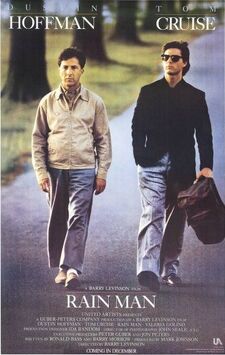
You may not recognize the name or even the picture but you have been touched by Kim Peek. While the movie 'Rain Man' is not based on his life, Dustin Hoffman based many of his mannerisms and speech-patterns on Mr. Peek. Hoffman even thanked Mr. Peek in his Oscar acceptance speech and went so far as to give Mr. Peek his personal Oscar. Below is a wonderful video about his life.

Enjoy and gods speed Kim...

AD

Sunday, January 3, 2010

Welcome 2010...


A quick series of interesting articles that have been sitting in my 'tabs' for days:)

First up are a couple of NY Times blog posts.

1) How to raise IQ in Toddlers with Autism by Tara-Parker Pope
It's all about the Early Start Denver Model. They published results of a 2-year study with 48 participants in the journal Pediatrics. The results suggest that, as a result of their intervention, children in the Early Start program demonstrated greater gains than a control group. I am 100% in the pro-early intervention camp but have a couple of concerns with this article and research. The article frames the Early Start Denver Model as a new approach. Far from it, the Denver Model is a fairly classic early-intervention program based on the principles of Applied Behavior Analysis. There are many such programs and all show similar results. As to the research, this is not 'double-blind' research by any stretch of the imagination. Research is conducted and data compiled by people with personal, professional and financial investments in the outcomes. Does this make it suspect? Not really as their results merely add to the body of research supporting early intervention but as someone who has worked in University funded 'community-based' schools, I can assert that any data taken in-situ by staff (IOA be damned:) is somewhat suspect...
Lastly, this school is supported by the UC Davis M.I.N.D. Institute so this 'community-based' school has multiple PhDs. on staff, many Master's students employed there and a extremely highly-trained staff. This model is NOT transferable to your average school...dont' get me wrong. I LOVE center-based research but these models do not work well in non-university based settings...
---------------------------------------------------------------------------------------
2) Can you teach empathy to children? by Lisa Belkin.
This piece revolves around an essay by Liane Carter who runs and founded a sports league for children with a range of deficits and disabilities. Here's a taste as a mother of one of the teenage volunteers call her:

“I need a report describing your program, discussing what my son has contributed, and what kind of growth you’ve seen in him. And also, what he’s learned from working with those kids,” she says.

Those kids.

“I’m sorry, what did you say your son’s name is?” I say, starting a slow seethe.

“Jeremy.”

Who is Jeremy? I honestly don’t remember him. We have so many volunteers.

But as usual I am polite. “Sure, happy to,” I say, savagely chopping the tomatoes, thinking: If it’s your kid’s community service, why isn’t he calling me himself? Why isn’t he writing his own report? “Oh, just one more thing. Could you have it for me before Friday? I can pick it up, just leave it in your mailbox.”

“No problem,” I say, and hang up. I whack at a pile of carrots, thinking: Let me save you the trouble. I’ll just give him a T-shirt that says: “Look, I’m selfless and wonderful. I volunteer with autistic children.”

It's a short post but check out the posts at the bottom. It really touched a lot of nerves...not just parents of children with disabilities but average readers who took issue with Mrs. Carters 'empathy':)


AD

Thursday, December 31, 2009

How'd I Miss this?


I blame the United States Post Office for not bringing me last month's Wired Magazine which had an excellent article on the use of vaccines on children and the possible link to Autism (spectrum disorders). It does not focus on the autism question but instead looks at the debate from a public health standpoint and posits the following: The decision to NOT vaccinate is driven by FEAR and not understanding and, in addition to putting YOUR child at risk, the decision not to vaccinate puts MANY children at risk. The article is told through the lense of a lengthy interview with Dr. Paul Offitt.
While a very important article I have two critiques. One, it was not very balanced. It does children no good to characterize anyone who is concerned about vaccines as kooks and two, the author is not a science writer with a history of covering complicated scientific issues. This leaves her in a position wherein she relies too heavily on her interview subjects and less so on her own understanding and research.
Still...a MUST READ.


AD

Thursday, December 24, 2009

Merry Christmas Me Hermano Negro...


You are my sunshine...
My only sunshine...
You make me happy...
When skies are gray...
If you only knew Dear...
How much I loved you...
Oh please..don't take my sunshine away...

You are as loved as love can get my chunky monkey brother from the same mother. Enjoy this little movie and know that everyone you've ever touched is thinking about you today...especially the ones you touched naughty-style:)

Love and Christmas...

Adam

Sunday, November 29, 2009

From the 'Obvious' files...


The more alcohol expectant mothers drink, the greater the effects on their children. Research from Perth's Telethon Institute for Child Health Research has found evidence that the amount and timing of alcohol consumption in pregnancy affects children in adverse ways.

“Mothers who reported what we would classify as heavy drinking in the first trimester of pregnancy were nearly three times as likely to report that their child suffered with anxiety and/or depression or somatic complaints,” Lead author Colleen O'Leary said.

“Those who drank moderately during that first trimester were twice as likely to report those types of behavioural issues for their child."

So drinking while pregnant is not a good idea. Who would have guessed it?
---------------------------------------------------------------------------
Cigarette smoke and air pollution cause people to cough...I know, it sounds silly but they've actually discovered exactly how this occurs on the hopes they can help people with chronic coughs...


In another story, exposure to metals and diesel emissions linked to respitory problems in children...

Hope everyone had a great Thanksgiving

AD

Sunday, November 8, 2009

Science notes from the Frontline.

Babies language learning starts in the womb.

I love this research as it reminds me that children with ASD need thousands of opportunities to come into contact with language in order to learn. We must babble with them, talk to them, read to them and constantly 'immerse' them in language.

Research suggest that learning to talk makes it easier to understand the speech of others.

This is fascinating news coming out of Haskins Laboratories (and if you are not familair with those guys, definitely check them out: Haskins Laboratories)...

Dr. David Ostry:

"Our study showed that speech motor learning altered the perception of these speech sounds. After motor learning, the participants heard the words differently than those in the control group...One of the striking findings is that the more motor learning we observed, the more their speech perceptual function changed."

I read material like this and think "I know nothing":) So much to learn...

Stay learning...

ad

Sunday, November 1, 2009

British Journal of Psychiatry: Sugar causes violence?


A very interesting study that came out recently. I've cut n pasted a nice article on About.com from Elizabeth Hartney.

"A study published in the British Journal of Psychiatry has shown a link between the daily eating of sweets and violence later in life.

Based on a study of 17,500 ten-year-old children in 1970, the research found that of those who went on to commit violent crimes in adulthood, nearly 70% ate candy every day, compared to 42% who did not go on to commit violent crimes.

The study took many different factors into account, including parenting style, and found that the candy-violence relationship remained when these factors were included in the analysis.

The study authors speculated that the cause of this phenomenon may be the use of candy by parents to control children's behavior. This prevents children from developing the ability to delay gratification, which has been found in other studies to be related to delinquency. Candy also contains additives which have been found to promote aggression.

This is scary news for parents. So what should you do if you think your child is addicted to food or a chocoholic? Obviously, limiting sugar will do no harm, and may do a lot of good. Saving sugary treats for special occasions, rather than allowing them to become a daily expectation may be helpful. And avoid the use of candy to control your child's behavior -- it may seem like a "quick fix" at the time, but in the long term, it may lead to greater problems.

Encouraging children to enjoy healthy alternatives, such as fruit, will have numerous short and long term health benefits, as well as psychological benefits. And parents should remember that their most powerful tool is role modelling, so hold off on eating candy in front of your kids, and let them see you munching a banana or apple as a healthy snack. "

Monday, September 7, 2009

'The Horse Boy'


By now, I am sure most of you have heard of the 'Horse Boy' (That's a link to the website). The story is simple. Boy is 'autistic'. Father is overwhelmed by treatment options. Boy gets on horse and talks!!! Father takes boy to Mongolia to be with horses and shamans and boy improves fairly dramatically. I love these types of stories and fear them...I love them because they reinforce my belief that each child is unique and that only be spending time with them and 'listening' to them can we really reach them. (I can hear my behaviorist colleagues howling already;)...on the other hand, I fear parents suspending treatments that are proven and efficacious and rushing off to Mongolia...I'd love to hear your thoughts.

Here is a wonderfully diverse series of response to 'The Horse Boy' printed up in the NY Times.

Temple Grandin: "I have had a number of parents tell me that when their child was in a therapeutic riding program, their child spoke their first words. It’s rhythm and balance. These activities are really good for the autistic brain."

Simon-Baron Cohen: "Children often do develop in leaps and bounds rather than having some kind of steady, linear increase, and that’s true for any child — for typically developing children as well as children with a disability. Sometimes it is a change in environment or usual surroundings or input."

Paul Offit: "Obviously these are anecdotal experiences without a control group. The natural history of mild to moderate autism is that it does get better over time. You’re worse between 2 and 5, and you tend to get better between 5 and 10. You mature, and you get better. If you take a child who is screaming uncontrollably and put them in a car, they calm down."

adam

Sunday, August 30, 2009

A ‘Dose of Nature’ for Attention Problems


From a 10/2008 NY Times article:

Parents of children with attention deficit problems are always looking for new strategies to help their children cope. An interesting new study suggests that spending time in nature may help.

A small study conducted at the University of Illinois at Urbana-Champaign looked at how the environment influenced a child’s concentration skills. The researchers evaluated 17 children with attention deficit hyperactivity disorder, who all took part in three 20-minute walks in a park, a residential neighborhood and a downtown area.

After each walk, the children were given a standard test called Digit Span Backwards, in which a series of numbers are said aloud and the child recites them backwards. The test is a useful measure of attention and concentration because practice doesn’t improve the score. The order of the walks varied for all the children, and the tester wasn’t aware of which walk the child had just taken.

The study, published online in the August The Journal of Attention Disorders, found that children were able to focus better after the “green” walks compared to walks in other settings.

Wednesday, August 26, 2009

Do you have a child diagnosed with autism spectrum disorder who has a younger infant sibling?

The Infant Brain Imaging Study (IBIS) at the Center for Autism Research, The Children’s Hospital of Philadelphia is looking for participants!

Twin and family studies have shown that younger brothers and sisters of children with autism are at a higher risk of developing autism than those children who do not have relatives with this condition. Information gained about early brain development in children with autism may improve methods of early detection and intervention for infants who may be at risk for developing autism. Earlier identification and treatment may lead to better outcomes for these young children and their families.

At the Center for Autism Research, The Children’s Hospital of Philadelphia, we aim to identify very early brain features that may be characteristic of infants at risk for autism. To do this, we are actively seeking to enroll families who have a child with an autism spectrum disorder and an infant sibling 6 months old or younger for the Infant Brain Imaging Study (IBIS). Developmental evaluations and MRI scans of your infant’s brain will be completed at 6, 12, and 24 months of age. Compensation for participation will be provided, and travel arrangements can be made for families traveling from further distances.

To learn more about participating in this study, please contact our study coordinator at 1-866-570-6524 (toll free) or autism@email.chop.edu.

Sunday, August 16, 2009

Students With Disabilities More Likely To Face Physical Punishment In School


Human Rights Watch and the ACLU just put out a report on how children with disabilites are treated in public schools. It's not pretty reading but necessary...

"In this 70-page report, the ACLU and Human Rights Watch found that students with disabilities made up 18.8 percent of students who suffered corporal punishment at school during the 2006-2007 school year, although they constituted just 13.7 percent of the total nationwide student population. At least 41,972 students with disabilities were subjected to corporal punishment in US schools during that year. These numbers probably undercount the actual rate of physical discipline, since not all instances are reported or recorded."

Read the report HERE.

Adam

Saturday, August 15, 2009

Number of children diagnosed with Autism now 1:100

The numbers continue to climb and answers seem elusive at best. Two recent studies from the M.I.N.D. Institute at UC Davis link abnormal antibodies in maternal blood to increased rates of autism. In one study, six of the seven affected children had 'regressive autism', the type that manifests after a year or two of typical development. The scientists isolated a form of antibody called 'Immunoglobuliin G' (IgG)and discovered it bound to two proteins in fetal brain tissue.


In the second study, scientists at UC Davis and the California National Primate Research Center injected rhesus monkeys with IgG at the end of their third trimester of pregnancy. These monkeys demonstrated higher rates of emitting stereotypy (pacing, arm-waving, back-flipping)
which suggests a behavioral link.


Thanks to Age of Autism and Kent Heckenlively for this story.

adam

Monday, May 4, 2009

Monday, November 17, 2008

Smoking causes Autism?


Not quite but interesting research is out that suggests that a link between nictotine addition and autism. It's an inverse relationship so read closely this link from Scientific Frontline.

Researchers Find Link Between Nicotine Addiction and Autism


Hold that thought, Swedish researchers find that children whose mother smoked were 40% more likely to be diagnosed with autism. Yikes. Weird I hadn't come across this...it's a 2002 study.

--

Okay, I'm dying to check out a presetation by William Stillman, author and person living with autism...it's desrcibred as a 'Demonstration lets you get 'inside' autism and see what it's like' Check out the article HERE. (Originally published by Poconorecord.com)

--

Also, a report out by Treehouse, the British autism org. about bullying and autism.


adam

Thursday, November 6, 2008

Autism's False Prophets


Good little video about a good little book about a big controversy.

ad

Tuesday, November 4, 2008

Have you ever seen the rain?


Interesting study out of the Archives of Pediatric and Adolescent Medicine, on a connection between rates of autism and prevalence of rainfall/precipitation. Results showed a 'positive association' between the amount of precipitation a birth cohort (number of children living near each other) and the autism prevalence rates (number of children born with autism in that area). They don't know the exact connection except to say it suggests an environmental trigger that may or may not be linked to a genetic predisposition.

This from a Palm Beach Post article by Phil Galewitz:

“Autism prevalence was higher for birth cohorts that experienced relatively heavy precipitation when they were younger than three years,” the authors write in the study. “This corresponds to the time at which autism symptoms usually appear and when any post-natal environmental factors would be present.”

Several possible explanations exist for the positive association, according to the researchers: Precipitation may be associated with more indoor activities, such as television and video viewing, that affect behavioral and cognitive development. The increased amount of time spent indoors also may expose children to more harmful chemicals, such as those in cleaning products, or decrease their exposure to sunshine, which helps the body produce vitamin D, the study said.

“Finally, there is also the possibility that precipitation itself is more directly involved,” the authors write. “For example, there may be a chemical or chemicals in the upper atmosphere that are transported to the surface by precipitation.”

The study notes the findings are still preliminary and more research is needed to clearly prove a link.

ad

A little clip of the 'real' Rain Man.


Sunday, November 2, 2008

Link between nursing and chidlhood obesity...

In other words, breastfeeding can help reduce childhood obesity. According to researchers, children who are breastfed are better at determining when they are 'full'.

Wonderful Youtube video about 'How to describe Autism'


enjoy.

ad

Thursday, August 21, 2008

Disruptive Behavior...


There have been a lot of articles recently (HERE's one)about the disruptive behavior of children diagnosed with autism. These articles point out how disruptive these kids can be at school, in church or at the mall. There was a fairly notrious case recently in which a mother was asked to de-plane because her child had a 'meltdown'.

I've worked with thousands of kids and one thing always turns out to be true. ALL BEHAVIOR IS LEARNED...and it they can learn it, they can un-learn it.

Parents don't like to hear this any more than teachers do but the child having an upset in front of you is responding to what is happening and their history of reinforcement. They are crying because it works. If that kid on the plane wanted off the plane you have no idea how reinforcing being taken off that plane was...they just increased that child's 'meltdowns' immeasurably. There are thousands of children diagnosed with autism who do not scream and yell or cause problems in public.

ad